The lights stayed on in this London home — the explanation surprised the neighbours
Imagine a rainy Saturday evening on a residential street in Greater London. A family is sitting down for dinner when the power suddenly goes off. The streetlights disappear, nearby windows go dark and the usual sounds of the house fall silent.
Yet one house soon has its lights back on. From across the street, the contrast is striking. How did the family manage it while the rest of the neighbourhood waited for the supply to return?
The street was in darkness — but one home had a backup plan
This illustrative story is set in a London neighbourhood during a local power cut. The neighbours did not witness anything mysterious: the family had prepared a portable generator to support a small number of essential appliances.
The neighbours noticed the lights — and wanted to know why
At first, everything goes quiet. The fridge stops humming, the music cuts out and the kitchen lights disappear. A phone torch becomes the only light on the table.
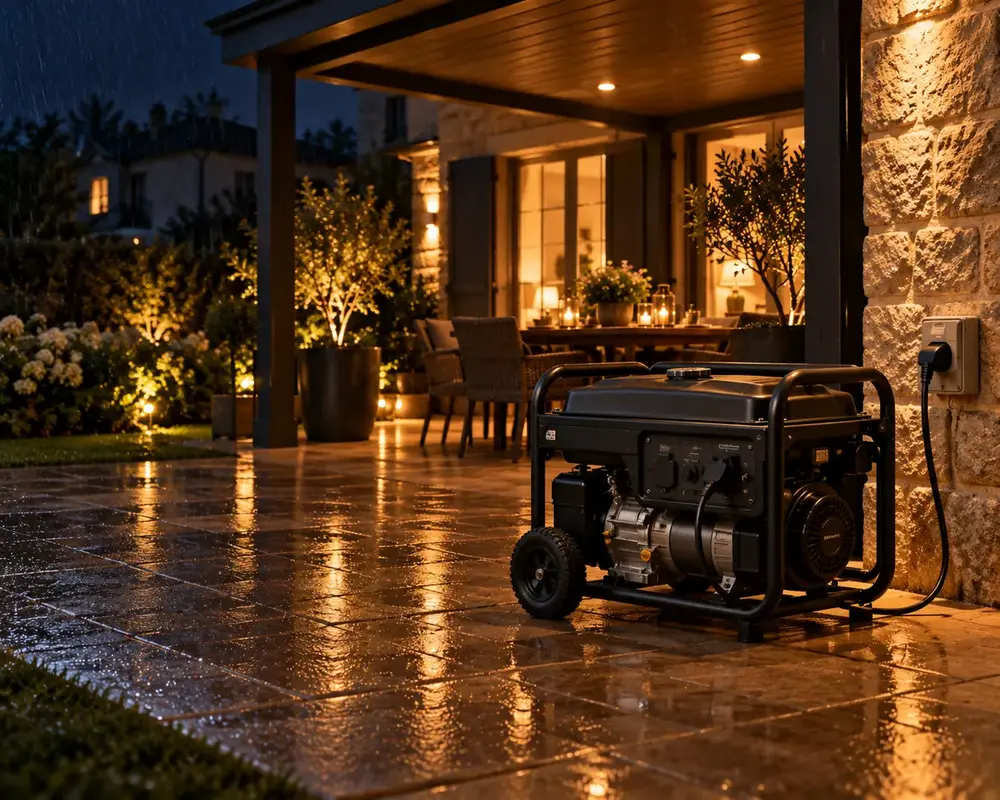
Outside, the street is dark. A neighbour steps out to check whether the outage affects the whole road. Across the way, one house gradually becomes visible again, with a few lights on inside and the covered patio softly lit.
The explanation is simple. Months earlier, the family had considered which items they would need during a power cut: a few lights, phone charging and possibly the fridge. They had chosen a generator with those limited needs in mind.
The surprise was not a secret power source — it was the difference a little preparation made.
The household had not planned to run every appliance at once. The aim was to maintain a few priorities until the mains supply returned.
The answer was outside the house
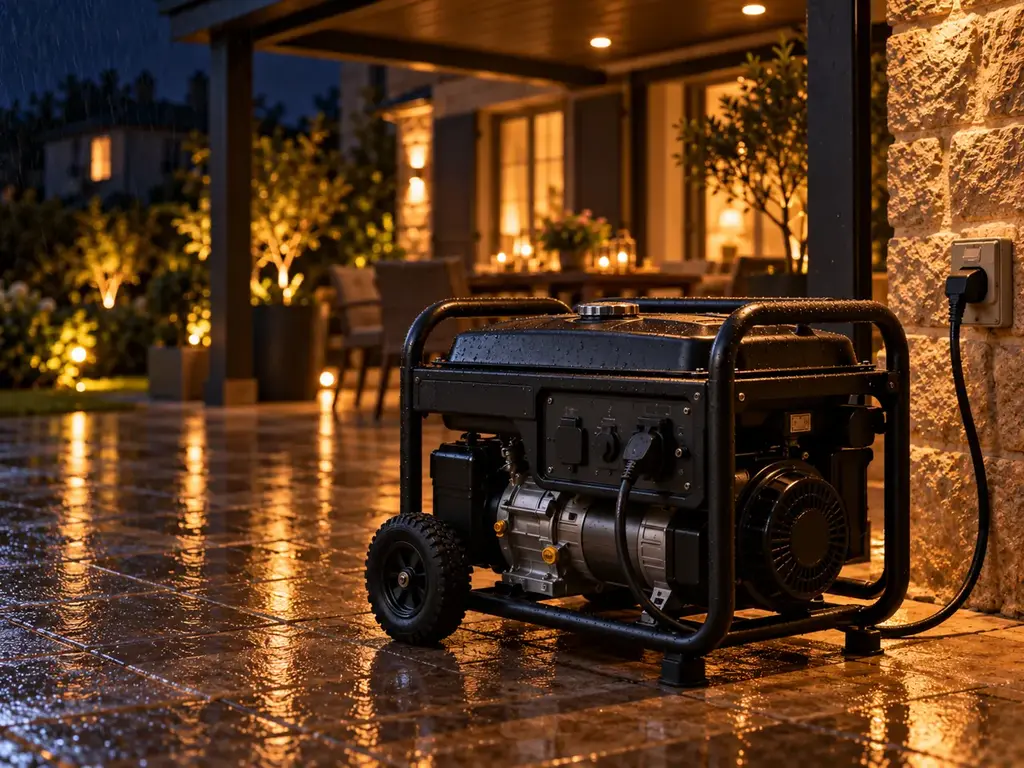
A family member moves the portable petrol generator to its designated outdoor position, well away from doors, windows and vents. It is never used inside a house, garage or enclosed space.
They follow the manufacturer's instructions, check the permitted load and connect only suitable equipment. A qualified electrician is required for any connection to a home's fixed wiring.
After the generator starts, a few lights come back on. The fridge can be powered where the generator's rating and connection arrangement permit it. The family can finish the evening without pretending that the entire house has returned to normal.
Not every light needs to come back on
The hallway remains dark and high-consumption appliances stay switched off. The family is careful not to exceed the generator's rated capacity.
From the street, the illuminated patio attracts attention. The neighbours' questions have an ordinary answer: a correctly selected backup generator, used outdoors and only for suitable loads.
When the mains electricity returns, the generator is shut down according to its instructions. The point of the story is not uninterrupted power, but planning for a limited outage.
Could a similar situation happen in the UK?
Power cuts can follow storms, local faults or planned network work. Households in London and elsewhere in Britain may wish to consider which essential devices they would prioritise during a temporary interruption.
That is the useful question to ask before choosing a generator: which devices need power, for how long and under what safe operating conditions?
From £199
What made the difference
A practical backup option for UK households
The family in this example had planned ahead. A portable petrol generator provided temporary electricity for selected equipment, not a promise to power an entire home indefinitely.
Different generators offer different outputs, sockets, noise levels, running times and fuel requirements. The right model depends on the actual appliances and their starting loads.
Indicative models are shown from £199. Confirm the specifications, current price, availability and any delivery charges before making a purchase decision.
Start by listing the appliances you would want to run during a temporary power cut.
A phone charger and a light have different requirements from a fridge or freezer. Check running wattage, start-up demand, sockets, fuel consumption, noise and manufacturer guidance.
Compare verified product specifications rather than relying on a photograph or an introductory price alone.
01Your appliances
List the devices you would like to run and check their wattage.
02The generator
Compare output, sockets, fuel use, weight and noise.
03Your requirements
Match the equipment to the intended load and operating conditions.
How it works
Generator safety comes before convenience
Never operate a petrol generator indoors, in a garage, or near doors, windows or vents. Exhaust gases contain deadly carbon monoxide.
Use the generator outdoors in accordance with the manufacturer's minimum clearance requirements. Keep it dry and positioned safely, and never connect it directly to household wiring without an appropriate professionally installed transfer arrangement.
Follow the manufacturer's instructions for fuel, storage, servicing, extension leads and permitted electrical loads. For advice on a particular installation, consult a qualified electrician.
Safety firstPetrol generators must only be used outdoors, away from openings, and according to the manufacturer’s instructions.
Product information
Which generator might suit your household?
Tell us which appliances you would like to support or what details you need. Ask about model specifications, prices and availability before deciding whether a generator is suitable.
Indicative starting price£199
from
Your cookie preferences
We use necessary local storage and optional cookies only with your agreement. Read more.